
If you're prepping your Eastern Shore condo for rental season, focus on your bathroom. Renters often judge properties by bathroom condition, and coastal humidity accelerates wear and tear. Tackling bathroom renovations early ensures your space is ready for peak bookings. Here's what you need to know:
Renovating with durable materials and proper planning helps protect your investment and keeps renters happy. Start early to avoid delays and missed rental income.
Before diving into material selection or hiring a contractor, you’ll need to tackle two critical steps: securing approval from your condo association and obtaining the appropriate local building permits. Skipping either can lead to costly fines or even the removal of completed work. Addressing these requirements early also helps protect your rental income, as delays in these areas are a common reason renovations miss the start of peak rental season. Reviewing your HOA guidelines and local permit regulations upfront can save time and headaches later.
As Block Renovation explains:
"Bathroom work is the most tightly regulated renovation in condo buildings because it involves shared plumbing stacks."
Your starting point should be your condo association’s governing documents - the Declaration, Bylaws, and Rules and Regulations, often referred to as the CC&Rs. These documents outline what you can and cannot do within your unit. In most cases, you own everything from the paint inward, while structural elements, plumbing stacks, and building systems are considered shared property managed by the association. Any work involving these shared systems will likely require formal board approval.
Be prepared to provide the board with a detailed description of your project, your contractor’s license and insurance details, a Certificate of Insurance (COI) naming the condo association as an additional insured, and a clear project timeline. Keep in mind that most associations restrict construction to weekday business hours, so plan accordingly. Depending on your location in Maryland, board approval can take anywhere from two weeks to two months, so it’s wise to submit your request as early as possible. Meeting these requirements on time ensures your condo stays on track for the upcoming rental season.
After addressing HOA rules, your next focus should be obtaining the necessary permits for your renovation. Cosmetic updates like painting, swapping out fixtures in the same location, or installing new flooring over an existing subfloor generally don’t require permits. However, any work involving plumbing, electrical upgrades, or structural changes will.
Here’s a breakdown of common permit types and when they’re needed:
| Permit Type | Required For |
|---|---|
| Building Permit | Structural changes, wall removals, framing adjustments, or adding windows |
| Plumbing Permit | Moving fixtures, installing new supply lines, or replacing shower valves |
| Electrical Permit | Adding wiring, upgrading to GFCI outlets, moving outlets, or radiant floor heating |
| Mechanical Permit | Installing exhaust fans or extending HVAC systems |
Maryland follows the Maryland Building Performance Standards (MBPS), which are enforced at the county level. As Lynch Design | Build points out:
"Most bathroom renovations require permits, especially when plumbing, electrical, or structural work is involved. Every county enforces its own version of the Maryland Building Performance Standards (MBPS)."
Permits in Maryland are generally valid for 180 days, giving you ample time to complete your project if you start early. To simplify the process, consider hiring a contractor licensed by the Maryland Home Improvement Commission (MHIC). Licensed contractors can handle pulling permits for you and take on the responsibility for ensuring the work meets code - one less thing for you to worry about.
With HOA approvals and permits squared away, it’s time to create a plan that ensures your project stays on schedule without disrupting your rental bookings.
Start by working backward from your first confirmed rental date. If your high season begins in late June and you’re planning a full custom remodel, aim to start by early May. This allows for approximately 6–10 days of work, inspections, and any unforeseen delays.
For simpler projects, timing is more flexible. Basic updates using stock materials might only take about five days, while custom remodels can stretch from six to ten days. Aligning your renovation schedule with your rental calendar is key to minimizing downtime.
"Traditional bathroom remodels take 2–4 weeks, which is way too long when you're trying to enjoy beach life." - Mast Contracting
To avoid mid-project delays, order all materials - vanity, sink, faucet, toilet, shower system, tile - before demolition begins. This step ensures everything is ready when the work starts, keeping your timeline intact.
Once your schedule is set, the next priority is estimating costs to establish a solid budget.
A well-planned timeline provides the foundation for estimating labor costs and managing contingencies. Bathroom renovation expenses can vary significantly depending on the scope of work, material choices, and the unique logistics of condo projects. In these settings, labor can account for 40% to 65% of the total budget, factoring in restricted work hours, elevator coordination, and debris removal. Plumbing work, especially if it involves moving fixtures or tapping into shared systems, can also increase costs.
It’s wise to allocate a 10–15% contingency fund for unexpected surprises. Properties on the Eastern Shore are often susceptible to hidden moisture damage, such as rot, mold, or salt-air corrosion, which may only become evident after demolition. These issues can add $1,000 to $3,000 to your final bill. Having a financial buffer ensures that these challenges won’t throw off your plans - or your rental season.
"Material choices add another big layer... Cheaper products may look fine for a year or two, then peel, chip, or swell right when you need the bathroom most." - Mast Contracting
Picking materials that can handle coastal conditions is key to keeping your rental bathroom looking good and standing up to heavy use. Once your budget and timeline are set, the next step is deciding on the right materials.
Porcelain tile is a smart choice for bathroom floors and walls. It’s dense, water-resistant, and reduces grout lines, especially if you go for large-format tiles like 12"x24". These not only make cleaning easier but also give smaller bathrooms a more spacious feel.
For shower walls, solid-surface or composite panels are a great option. They eliminate grout lines and prevent moisture-related problems.
"Solid surface shower walls don't let moisture sneak in like tile does in coastal environments. No grout lines means no spots for salt air and humidity to cause problems." - Mast Contracting
If you prefer a softer flooring option, waterproof luxury vinyl plank (LVP) is worth considering. It’s faster to install, handles sand and moisture well, and stands up to heavy traffic better than hardwood or laminate. A matte or textured finish is a must to reduce slips on wet floors.
For non-tiled walls, go with a semi-gloss or satin paint like Benjamin Moore Aura Bath & Spa. These finishes are easy to clean and resist moisture effectively. When it comes to vanity countertops, quartz and cultured marble are ideal. They’re non-porous, don’t require sealing, and resist stains caused by humidity. Avoid natural options like marble or travertine - they’re porous, need regular sealing, and won’t hold up well in high-turnover rentals.
Mid-range fixtures strike the perfect balance between durability and cost for a rental. Look for WaterSense-labeled faucets and showerheads to cut water use without sacrificing performance.
For finishes, brushed nickel and chrome are practical choices. They resist corrosion from salt air and handle frequent cleaning better than specialty metals, which can tarnish or pit in coastal environments.
Toilets with comfort-height or dual-flush designs are renter-friendly and help reduce water consumption. For shower enclosures, framed or semi-frameless glass is more practical than frameless designs, which require constant upkeep to prevent water spots and soap scum.
Durable fixtures are only part of the equation - proper ventilation is just as important to protect your investment.
The solution here is straightforward: install an exhaust fan with a built-in humidity sensor that vents directly outside. Models like the Panasonic WhisperGreen turn on automatically when moisture levels rise, ensuring the bathroom stays dry even if renters forget to use it. For smaller bathrooms, go with a fan rated at 80 CFM, while larger ones need at least 110 CFM.
"A properly sized exhaust fan is not optional in coastal bathrooms - it is essential." - Larson & George Baldwin, Founders, Baldwin Builders
One common mistake is venting into an attic, which just moves the moisture problem elsewhere. The duct must extend all the way to the outside. Pair the fan with cement backer board - like Durock or HardieBacker - behind tiled surfaces. Unlike greenboard drywall, these materials resist moisture and mold.
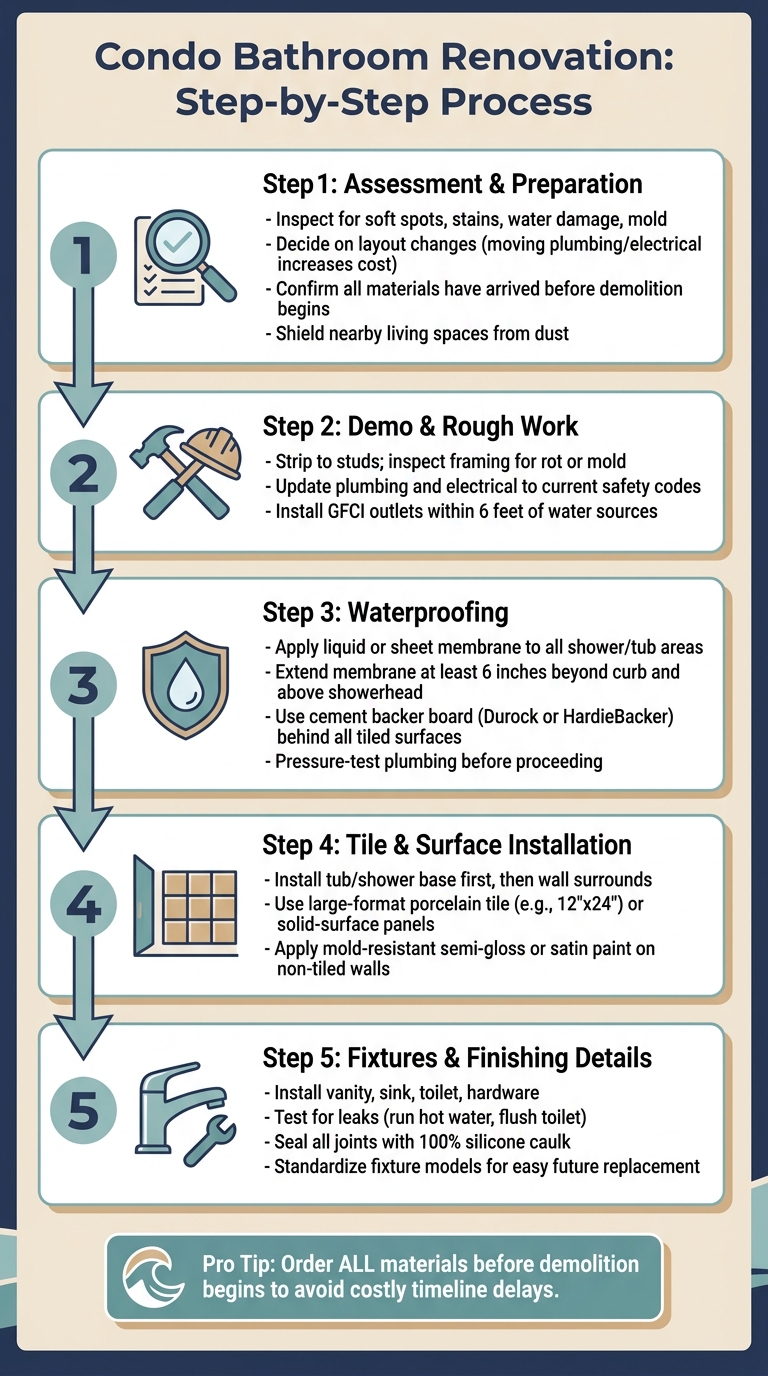
Condo Bathroom Renovation Process for Rental Season
With materials and permits in place, here's how to tackle your bathroom renovation effectively.
Start by thoroughly inspecting the bathroom for any signs of trouble, like soft spots, stains around fixtures, or discoloration on walls - these can point to water damage or mold. Decide if you're keeping the current layout or making changes. Keep in mind, moving plumbing or electrical lines can increase both the complexity and cost of the project. A detailed inspection is key, especially in areas prone to coastal humidity, where hidden water damage is a frequent issue.
Clear out all toiletries, rugs, and towels, and make sure to shield nearby living spaces from dust. Before you begin demolition, double-check that all your ordered materials have arrived. Back-ordered items can throw off your timeline.
"Preparation helps protect both your budget and your routine. If you know what you want before demolition begins, your contractor can order materials on time, schedule crews more efficiently, and reduce the chance of expensive mid-project changes." - Vinis Renovation & Restoration
Once you've completed your assessment and preparation, you're ready to move forward with demolition and system updates.
Demolition should be done with care. Strip materials down to the studs so you can inspect the framing for any signs of rot or mold. This is especially important in older coastal homes, where years of humidity may have caused damage. If you find mold or compromised framing, address these problems immediately with proper remediation. After that, update the plumbing and electrical systems to meet current safety codes.
Install GFCI-protected outlets within 6 feet of water sources, as required. Once the rough plumbing and electrical work pass inspection, focus on waterproofing. Apply a liquid or sheet membrane to all shower and tub areas, extending at least 6 inches beyond the curb and above the showerhead to prevent moisture issues. Use cement backer board behind all tiled surfaces, and test the plumbing under pressure before moving on to finishes.
"Waterproofing is non-negotiable in rental bathrooms. Tenants rarely report small leaks early, so moisture damage compounds over time and turns into expensive mold remediation or structural repairs." - derekpalmetto, Investment Strategist
Once waterproofing is complete, it's time to install fixtures and add the finishing touches. Begin with the tub or shower base, then move on to wall surrounds, the vanity, sink, toilet, and other hardware. Test for leaks by running hot water and flushing the toilet, ensuring everything works perfectly before sealing joints with 100% silicone caulk.
For non-tiled walls, use a mold-resistant semi-gloss or satin paint. These finishes are easier to clean and perform better in humid environments compared to flat paint. When selecting hardware, opt for solid metal faucets in finishes like chrome or brushed nickel, which are more durable and less prone to chipping. Standardizing your toilet and fixture models can also save you headaches down the road, as replacement parts will be easier to find locally. These details not only improve the look of the space but also ensure durability and easier maintenance, especially for rental properties with frequent turnover.
Once you've chosen the right materials and completed renovations, it's time to focus on design and upkeep strategies that can make your rental bathroom stand out.
Coastal rentals face unique challenges like humidity and salt air, so your design needs to balance aesthetics with practicality. Consider warm neutral tones like clay, sand, or taupe, paired with soothing shades such as sage green or muted blue. These colors create a calming, timeless atmosphere, perfect for renters who want a relaxing retreat. Plus, they won't feel dated if you're not redecorating frequently.
"A 'coastal bathroom' isn't just a design trend; for us, it's a tribute to the place we call home. By moving away from generic, standard, uninspired designs and embracing a palette of crisp whites and rhythmic blues, we help Delmarva homeowners create spaces that feel as refreshing as a morning breeze off the Atlantic." - Brian Spicer, CEO, Baths by Spicer Bros.
When it comes to materials, large-format porcelain tiles or solid-surface panels are excellent choices for their low-maintenance qualities. For hardware, finishes like matte black or brushed nickel provide a sleek contrast to neutral walls while maintaining a modern, inviting look.
In rental properties, every design decision should prioritize ease of cleaning and durability. Luxury vinyl plank (LVP) flooring is a standout option, offering resistance to sand, water, and wear. Pair it with quartz countertops, which are non-porous and stain-resistant, ensuring they stay looking great without frequent upkeep.
"Solid-surface walls, luxury vinyl plank flooring, and preselected fixtures get the job done fast while delivering results that withstand coastal humidity and heavy use." - Mast Contracting
Between rental seasons, focus maintenance efforts on these key tasks:
These small, routine actions can save you from costly repairs down the line. Standardizing fixtures is another smart move - it simplifies repairs and ensures replacement parts are easy to find.
A bathroom that's both safe and comfortable enhances tenant satisfaction while minimizing liability risks. Features like slip-resistant flooring, recessed LED lighting, grab bars, and comfort-height toilets make a big difference. Modern grab bars in finishes like brushed nickel or matte black blend seamlessly into the design while meeting ADA standards. These additions not only appeal to families and older renters but also cater to accessibility-conscious guests, keeping your rental competitive and renter-ready year after year.
Creating a rental-ready bathroom is all about careful planning and smart choices. Start by understanding your HOA rules and securing any necessary permits. From there, focus on selecting moisture-resistant materials and safety features that can handle the demands of rental season. Durable, practical design ensures your bathroom remains inviting and functional, even in the face of humidity and salt air.
On the Eastern Shore, the rental market is highly competitive, and the condition of your bathroom plays a big role in booking rates and guest satisfaction. A well-thought-out bathroom not only attracts reliable renters but also helps cut down on repair costs. In this market, smart design isn't just an aesthetic choice - it's a business decision.
To stay ahead, plan your project early, hire a reliable contractor, and get a detailed, written proposal to keep everything on track. Contractors who provide 95% of project estimates within 48 hours of consultations make it easier to move forward without unnecessary delays.
With OC Home Services, you're in capable hands. As an MHIC-licensed (#132817) contractor with over 200 combined years of experience across the Eastern Shore, they handle everything from permits to design and installation. Their expertise ensures every detail - like moisture-resistant finishes and proper ventilation - is tailored to meet the demands of rental season. Reach out to OC Home Services today to schedule your condo bathroom renovation before the busy season hits.
In Maryland, permits are generally necessary for bathroom renovations that include plumbing, electrical work, structural modifications, or changes to ventilation systems. On the other hand, cosmetic updates - like painting or replacing fixtures without altering their location - usually don’t require permits. Since regulations vary by county, it’s wise to check with your local permit office or consult a licensed contractor to steer clear of fines or legal complications from unpermitted work.
Opt for a streamlined 6–10 day full remodel. To save time and avoid complications, stick to updates that don’t involve relocating plumbing or tearing down walls. Choose practical solutions like stock vanities and durable, moisture-resistant materials such as solid-surface wall systems and luxury vinyl plank flooring. These choices not only speed up the process but also stand up to the humid conditions of coastal areas.
For a strong return on investment, prioritize durability and practicality - key for managing coastal humidity and frequent use. Skip full-scale renovations and opt to refinish tubs, tiles, or countertops for a refreshed appearance without the hefty price tag. When replacing materials, go for moisture-resistant choices such as solid-surface shower walls, luxury vinyl plank (LVP) flooring, and quartz countertops. Stick with neutral color schemes, and keep plumbing in its current location to cut down on labor costs and project timelines.
