
If your vanity box is dry, level, and solid, a top, sink, or hardware swap may be enough. If the box is soft, swollen, moldy, or leak-damaged, full replacement is usually the safer call.
On the Eastern Shore, humidity, slow leaks, and older bathroom layouts often turn a simple vanity update into a bigger repair. A partial swap can cost less up front, but it only works when the cabinet base is still sound. Once damage reaches the box, floor, wall, or plumbing, replacing the full unit usually makes more sense.
Before you decide, check these points:
A few inches in vanity size can expose unfinished flooring or wall areas. In older Delmarva homes, out-of-square walls and uneven floors can also add trim work, shimming, or patching after removal, which is why a vanity swap that reaches this point is usually scoped as a full bathroom remodeling job rather than a standalone fixture change.
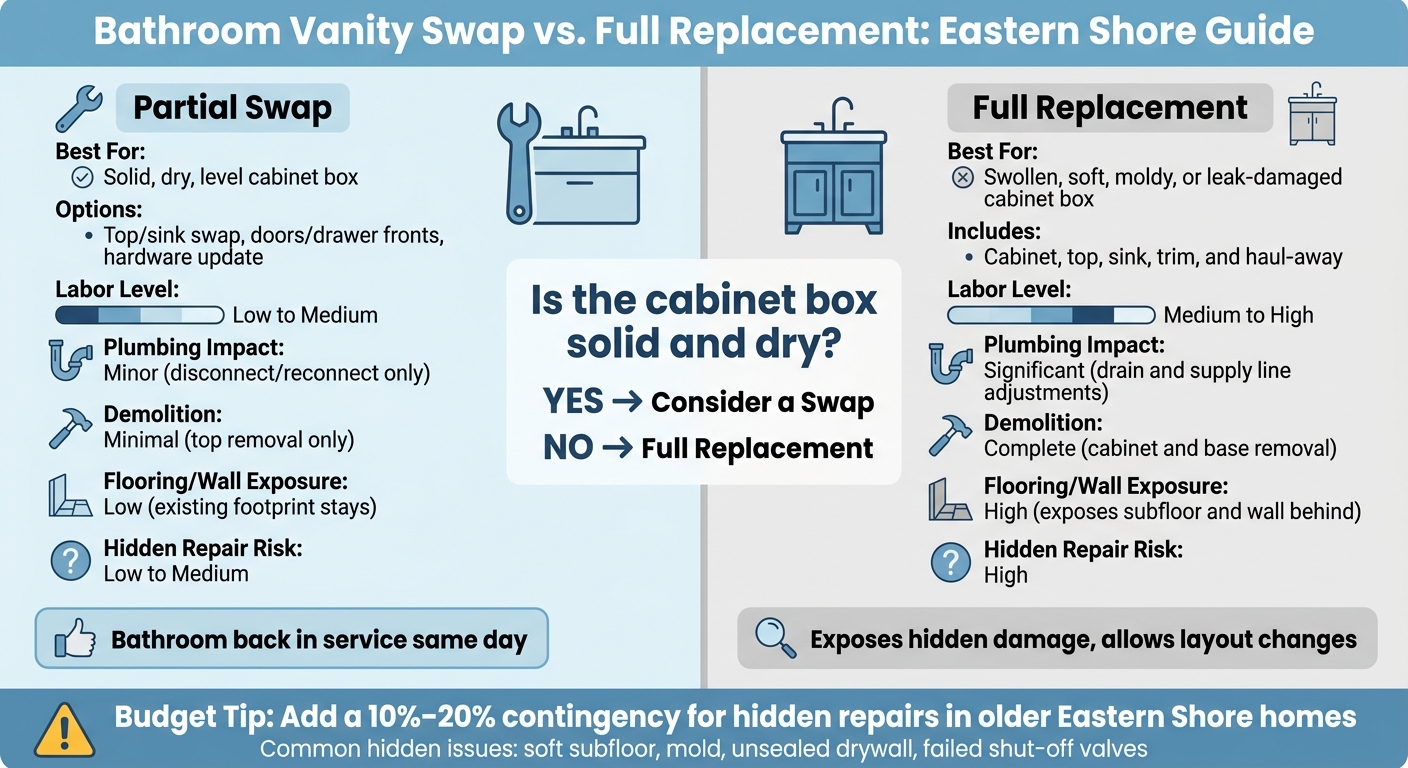
Bathroom Vanity Swap vs. Full Replacement: Eastern Shore Guide
| Option | Best for | Main risk | Labor level | Hidden repair exposure |
|---|---|---|---|---|
| Top or sink swap | Solid cabinet box, worn top | Damage hidden inside cabinet | Low to medium | Low to medium |
| Doors/drawers/hardware update | Dated look, sound cabinet frame | New parts may not fit warped frames | Low | Low |
| Full unit replacement | Soft, swollen, moldy, or leak-damaged vanity | Floor, wall, or plumbing repairs after demo | Medium to high | High |
The short version is simple: keep a sound cabinet, replace a damaged one. The rest of this guide breaks down where that line usually falls in Eastern Shore bathrooms.
A top or sink swap makes sense when the cabinet base is solid, level, and dry. If that base is still in good shape, replacing only the top can give the bathroom a new look without tearing out the whole vanity. And if the cabinet itself is sound but the surface looks rough, it’s worth asking whether a new finish or updated hardware can do the job instead of a full replacement.
That said, this isn’t quite as simple as lifting one top off and dropping another on. The work still calls for professional faucet and drain reconnection. Once the old top comes off, you may also find backsplash lines or a strip of wall that needs patching before the new top goes in. That extra labor can shrink the price difference between a partial swap and a full vanity replacement.
On the Eastern Shore, coastal moisture has a way of hiding damage inside a cabinet that still looks fine from the front. A quick check of the base before replacing the top helps confirm whether a partial swap will last. That same hidden-damage check matters even more when the base or floor shows swelling.
If the cabinet box is still sound but the front looks tired or dated, swapping the doors, drawer fronts, or hardware is the simplest next move. The work stays on the cabinet, avoids plumbing, and keeps disruption low. New fronts and pulls can change the look of the room without turning it into a big remodel.
In older Delmarva homes, there’s a catch. Frames are often warped or out of square, and that can make new doors or drawer fronts stick, rub, or fail to close cleanly. Fit matters just as much as finish.
Before you spend money on a face-lift, open the cabinet and look for mold, wood rot, or delamination.
A plumbing-and-carpentry contractor can usually tell pretty fast whether the face can stay or the box needs more work. A face-only update stays a carpentry job. A full vanity swap adds plumbing, including disconnecting and reconnecting the water lines. If the box feels soft, looks swollen, or sits out of square, it’s time to shift from a surface update to full replacement.
If the cabinet box is swollen, soft, or moldy, a partial update won’t solve the problem. On the Eastern Shore, moisture often damages the cabinet from the inside first.
Once the old vanity is removed, the job can open up fast. Contractors often find damaged drywall, a rotted subfloor, or plumbing repairs that weren’t visible at the start. In older Delmarva homes, shut-off valves that no longer close all the way often get pulled into the job too. That’s the line between a full replacement and a basic swap: the problem goes past the surface, and full removal brings it to light.
Those hidden repairs are often what change the final cost and timeline. A vanity that looks like a simple replacement on day one can turn into drywall work, flooring repair, and plumbing updates by day two.
A different vanity size can also create gaps in the floor or wall finish. That means patching and refinishing, which adds labor and material cost. Before you order anything, confirm the exact dimensions of the new unit. A few inches can make a mess of what looked like a clean install.
For rentals and homes with moisture issues, full replacement often holds up better than doing patch repairs again and again. Hauling away the old cabinet, countertop, and sink is part of a full replacement. A site evaluation should spell out the full scope before a new vanity is ordered.
After you’ve narrowed down the right replacement path for your vanity, the next step is a site check. That visit confirms whether the cabinet, plumbing, and surrounding area can support the work. Before anything starts, OC Home Services checks the vanity base, plumbing, and any moisture damage under or behind the cabinet.
OC Home Services includes both plumbing and bathroom remodeling labor in the same estimate, which matters more than it might seem at first. It lets the team look at the vanity, water lines, and nearby structure in one visit. That keeps plumbing, carpentry, and installation on the same page whether the job is a top swap, a front update, or a full replacement. It also helps surface hidden repairs early, before they shift the final scope.
At the free estimate, confirm:
Once the vanity scope is set, cost comes down to how much of the room the job opens up. The biggest price driver usually isn't the vanity. It's what shows up after demo starts.
On the Eastern Shore, humidity and slow leaks have a way of hiding trouble in plain sight. Pull out the cabinet, and older Delmarva homes often reveal soft subflooring, mold, or drywall that was never sealed. That's why it's smart to build in a 10% to 20% contingency for hidden repairs in older Eastern Shore homes.
Older walls and settled floors can also add carpentry time during a full replacement. A new vanity from the showroom may look like a simple swap. In an older opening, it often isn't. Floors may be out of level. Walls may be out of square. That means more cutting, shimming, and trim work to get a clean fit.
A partial swap usually wraps up faster. A full replacement takes more labor because it adds demolition, haul-away, and, in some cases, wall or floor repair. Swaps stay inside the current footprint. Full replacements open up plumbing, drywall, and flooring, which is where extra work tends to start piling up.
| Factor | Vanity Top or Hardware Swap | Full Unit Replacement |
|---|---|---|
| Scope | Top, sink, or hardware only | Cabinet, top, and trim |
| Plumbing | Minor (disconnect/reconnect) | Significant (drain and supply line adjustments) |
| Demolition | Minimal (top removal only) | Complete (cabinet and base removal) |
| Flooring & Wall Exposure | Low (existing footprint stays) | High (exposes subfloor and wall behind) |
| Fit Flexibility | Low (must match existing cabinet) | High (can change size or layout) |
Those trade-offs feed straight into the pros and cons of each option.
At this point, the decision is pretty simple: how much of the existing vanity can you trust?
On the Eastern Shore, moisture is a constant issue. Older homes add another wrinkle because out-of-square walls and worn cabinet bases are common. A partial update makes sense only when the cabinet box is solid, dry, and square. When that condition is met, the upside is clear: the bathroom is back in service the same day.
That said, a swap doesn't fix a bad base. If the cabinet has taken on moisture, a cosmetic update can leave rot or mold sitting underneath the new finish. It may look better on the surface while the main problem stays put.
Full replacement comes with a different trade-off. It costs more, and it turns a smaller job into a bigger one. But it also opens up the room, exposes hidden damage, and gives you room to make layout changes.
Vacation property owners run into the same call. A quick swap can freshen up a rental bathroom before the next booking. But if the base is compromised, that cosmetic fix may just hide a problem that's better handled before guests put the bathroom through heavy use.
The rule is simple: protect a sound cabinet, replace a damaged one. Visible swelling, soft spots, or any history of leaks usually point to full replacement.
When you compare the cost of a swap with the risk of hidden repairs, one thing matters most: the cabinet box.
The question is simple: is the cabinet box solid and dry? If it is, swapping the top, sink, or hardware may make sense. If it isn’t, replacing the full vanity is the safer call.
On the Eastern Shore, staining, mold, mildew, or soft spots should be checked before you decide which way to go.
Before you request an evaluation, pull together a few basic details:
A vanity evaluation checks the supply lines, P-trap, and the structure around the unit so a simple swap doesn't cover up a deeper repair. OC Home Services runs this same check before quoting any bathroom remodeling job, since a vanity that looks like a quick swap on the surface sometimes turns into a full replacement once the box is opened up.
Check the cabinet for moisture damage, especially near the base and around plumbing connections. If the wood feels soft, spongy, crumbly, warped, or swollen, the cabinet box is usually no longer sound.
If the wood still feels firm and the cabinet remains securely anchored to the wall, it's likely still in good shape structurally. Discoloration, mold, or a musty smell can point to damage that may call for full replacement.
Yes. A new vanity can expose flooring or wall gaps, especially in older Delmarva shoreline bathrooms where the cabinet box isn't perfectly aligned or the original top or base has shifted from moisture.
Remove a failing vanity base or change the cabinet footprint, and hidden problems often show up fast. You may find uneven surfaces, old cutouts, or missing caulk lines that need repair before the new unit is sealed.
Set aside 15% to 20% of your total bathroom vanity budget for hidden repairs.
In older Eastern Shore homes, water damage often stays hidden until the vanity comes out. That’s when you find rotted subflooring, soft wall studs, or plumbing that needs to be moved a bit to fit the new layout. That extra budget cushion helps keep the job moving if those repairs show up.
