
If your cabinet boxes are dry and solid, refacing can work; if they show water damage, swelling, sagging, or layout problems, full replacement is usually the better call.
For many Eastern Shore homes, the decision is less about style and more about condition. Moisture, salt air, flooding, and old hidden damage can turn a simple cabinet update into a full tear-out. In Salisbury, a major kitchen remodel has reached about $36,000, and that makes the first decision simple: keep good cabinet boxes, replace bad ones.
Before choosing, focus on these points:
Quick Comparison
| Factor | Refacing | Full Replacement |
|---|---|---|
| Cabinet boxes | Must be in good shape | Old boxes removed |
| Layout changes | No | Yes |
| Storage upgrades | Limited | Much more room for change |
| Water-damage issues | Poor fit | Better path |
| Job timeline | Shorter | Longer |
| Mess and disruption | Lower | Higher |
| Best for | Solid cabinets, same layout | Damaged cabinets, bad layout, older homes |
The short version: refacing changes the look, replacement fixes the kitchen itself. The rest of the article breaks down when each option makes sense for your Delmarva home.
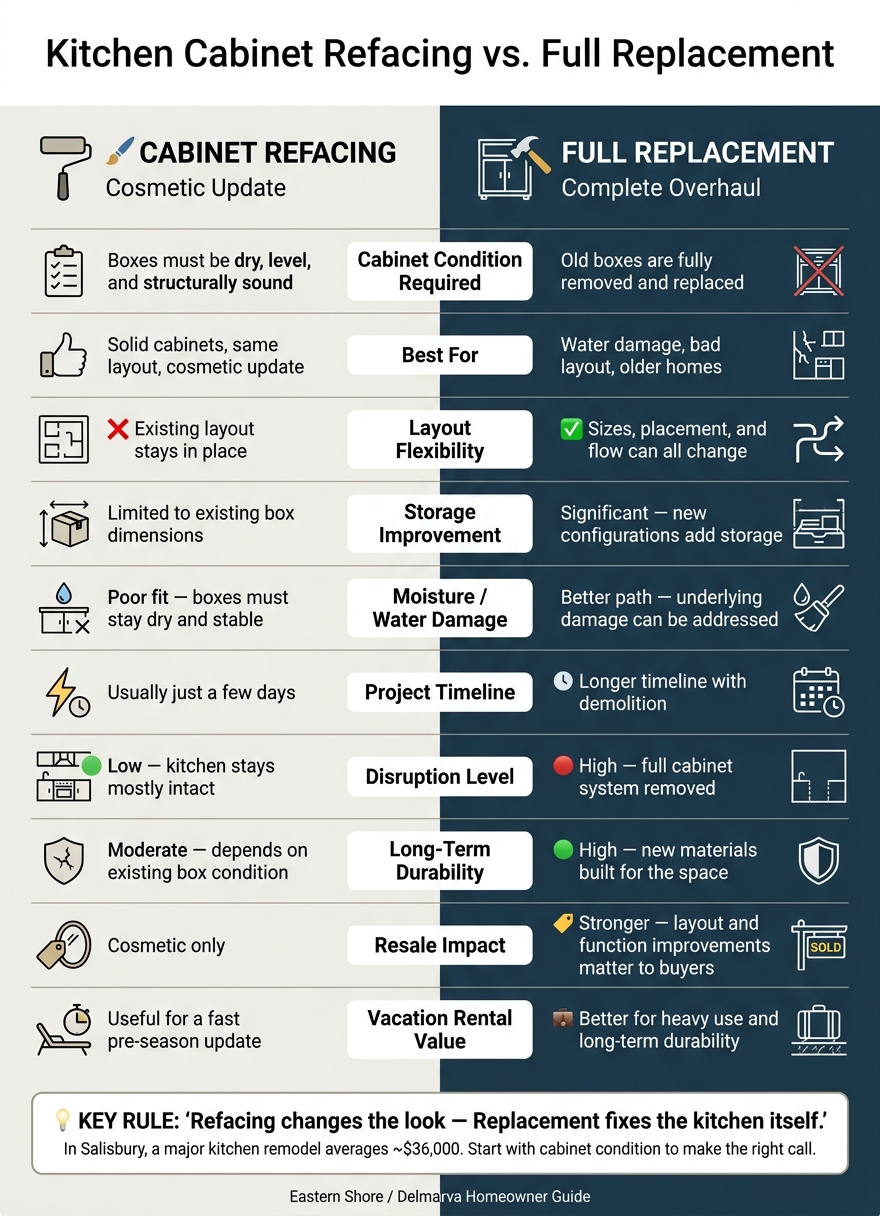
Kitchen Cabinet Refacing vs. Full Replacement: Side-by-Side Comparison
Refacing makes sense when the cabinet boxes pass a moisture and stability check, the layout still does its job, and you want a faster update with less disruption.
Start with the boxes. They need to be dry, level, solid, and firmly attached. If you find swelling, soft spots, or mold from water damage, refacing is off the table. Those issues show up often in Eastern Shore homes with moisture exposure.
Cosmetic wear is different. Chipped doors, worn drawer fronts, and dated finishes may look rough, but they don't automatically rule out refacing.
Refacing works best when the kitchen already functions well. If traffic flow makes sense and you don't need plumbing or electrical changes, keeping the current footprint can save time and mess.
That's the trade-off with refacing: you keep the layout you have. For kitchens that already work, that's often a smart move.
Some homeowners don't want a long tear-out job taking over the house. Refacing fits that kind of project. It's a good option when a quicker turnaround and less day-to-day disruption matter most.
If the boxes don't pass inspection, or the layout no longer fits how you use the kitchen, replacement is the better path.
Sometimes refacing just isn't enough.
If the cabinet boxes are damaged or the layout no longer works, full replacement is the fix that lasts. And if the cabinet boxes fail inspection, replacement stops being a preference and becomes the only option that makes sense.
Swollen, sagging, or unstable cabinet boxes do not meet the standard for refacing. In homes on the Eastern Shore, that matters more than people think. Hurricanes, coastal flooding, sewage backup, and long-term moisture can weaken the boxes enough that keeping them in place is a bad bet.
In those cases, replacement is usually the better path. Full removal also gives the space a chance to be cleaned and remediated the right way before new cabinets go in.
Refacing changes the look. It does not fix a kitchen that functions poorly.
If you need a new layout, more storage, or changes to the structure, refacing won't solve that. Full replacement lets you change cabinet sizes, cabinet placement, and the overall setup so the kitchen works the way it should.
Older Eastern Shore homes often come with a few surprises behind the walls. Once the cabinets are removed, demolition can expose water damage, uneven framing, or old plumbing and mechanical systems that were hidden from view.
That can push the job into a bigger scope than expected. It's one more reason full replacement is often the right call when the existing cabinets - or the space around them - show signs of trouble.
Next, compare cost, timeline, durability, and resale impact.
Start with the cabinets themselves. If the boxes are dry, level, and still solid, refacing can work. If they’re swollen, out of square, or hiding water damage, replacement is usually the safer path.
| Factor | Cabinet Refacing | Full Replacement |
|---|---|---|
| Cabinet condition required | Dry, level, structurally sound boxes | Old boxes are removed and replaced |
| Layout flexibility | Limited; the existing layout stays in place | Full; sizes, placement, and flow can change |
| Storage improvement | Limited to existing box dimensions | Significant; new configurations can add storage |
| Moisture risk tolerance | Low; the existing boxes must stay dry and stable | High; underlying water damage can be addressed |
| Construction disruption | Minimal; the kitchen stays mostly intact | Significant; the existing cabinet system is removed |
| Long-term durability | Moderate; depends on the condition of the existing boxes and materials used | High; new materials are built for the space |
| Project scope / permits | Limited tear-out; smaller scope | Full removal; larger scope and more coordination |
On the Eastern Shore, moisture can change the whole decision. What looks like a simple cabinet update can turn into a full tear-out once hidden damage shows up. In coastal Delmarva homes, that risk makes refacing a weaker fit in some kitchens.
Once you know whether the cabinet boxes are worth keeping, the next questions are usually simple: How much will it cost? How long will it take? And will it pay off later?
| Project Type | Typical Timeline | Resale Impact (Primary Home) | Value for Vacation Rentals |
|---|---|---|---|
| Refacing | Faster turnaround; usually just a few days | Cosmetic only | Useful for a fast pre-season update |
| Replacement | Longer project timeline | Stronger, because layout and function improvements matter to buyers | Better for heavy use and long-term durability |
In Salisbury, a major kitchen remodel has reached about $36,000.
For a primary home, replacement often does more for resale because buyers notice layout, storage, and day-to-day function, not just how the doors look. For rentals and second homes, replacement also tends to make more sense when the kitchen gets heavy use and needs to hold up over time.
The trade-off is pretty clear. Refacing is faster and less disruptive, but it only works when the existing cabinets are still in good shape. Replacement takes more time and coordination, yet it gives you room to fix damage, change the layout, and build a kitchen that fits the way the home is actually used.
Start with the cabinet boxes. That’s the make-or-break point.
If the boxes are dry, solid, and level, refacing is usually on the table. If you see swelling, sagging, or old moisture damage, full replacement is the better path.
From there, look at the layout. If your kitchen already functions well, refacing is often the simpler move. If you need more storage, smoother traffic flow, or appliances moved to new locations, replacement makes more sense.
Utility changes matter too. If the project involves moving a sink, outlet, or another utility line, check that the contractor is licensed for that work in Maryland or Delaware before the job begins.
For a bigger replacement job, coordination can make or break the schedule. A contractor who handles carpentry, plumbing, and electrical work under one contract can help keep the project on track.
Once you’ve looked at cabinet condition and layout, match the decision to how the home is actually used.
For a year-round primary home, daily function and long-term wear tend to matter most. If the kitchen has a bad layout or hidden damage, full replacement can make everyday use much better over time.
For a vacation rental or beach-area condo, wear happens faster. Salt air, humidity, and frequent guest use can be rough on a kitchen. In that setting, durable, easy-clean finishes and a job completed on time can help protect rental income.
Your cabinet boxes may be a good fit for refacing if they’re solid, level, and free of major damage.
Go with full replacement if the boxes have water damage, warped panels, or shaky construction. It also makes sense when your current kitchen layout just isn’t working anymore and you need structural changes to improve storage and day-to-day use.
Removing old kitchen cabinets often exposes problems you couldn't see before, especially in older homes or places that deal with a lot of moisture. Once the cabinets come off the wall, it's common to find water damage in the drywall or subfloor, old electrical wiring or plumbing that no longer meets code, and signs of sloppy repair work from past jobs.
You might also find walls or floors that aren't level. That matters more than people think. New cabinets need a flat, solid surface so they can be installed straight, secure, and lined up the way they should be.
For a primary home or rental, full cabinet replacement usually adds more long-term value than refacing.
Refacing can be a lower-cost cosmetic update. But replacement gives you the chance to fix layout problems, deal with hidden moisture damage that’s common in our local climate, and pick tougher materials that hold up better over time. The result is better appeal, better function, and less wear down the road.
