
In a small beach rental kitchen, the right kitchen remodel is simple: keep the layout tight, use low-upkeep materials, add closed storage, and pick appliances that fit the room.
If your cottage or condo sits near the water, your kitchen has to deal with salt air, humidity, sand, and heavy guest use. That means the best remodel is usually not the most expensive one. It is the one that helps cleaning crews move faster, gives guests enough room to cook, and holds up through peak season with fewer repairs.
Before any work starts, focus on these points:
The main goal is not style alone. It is a kitchen that looks clean in photos, stays easier to maintain, and does not slow down guest turnover. The details below break down which choices tend to work best in Eastern Shore beach cottages and rentals.
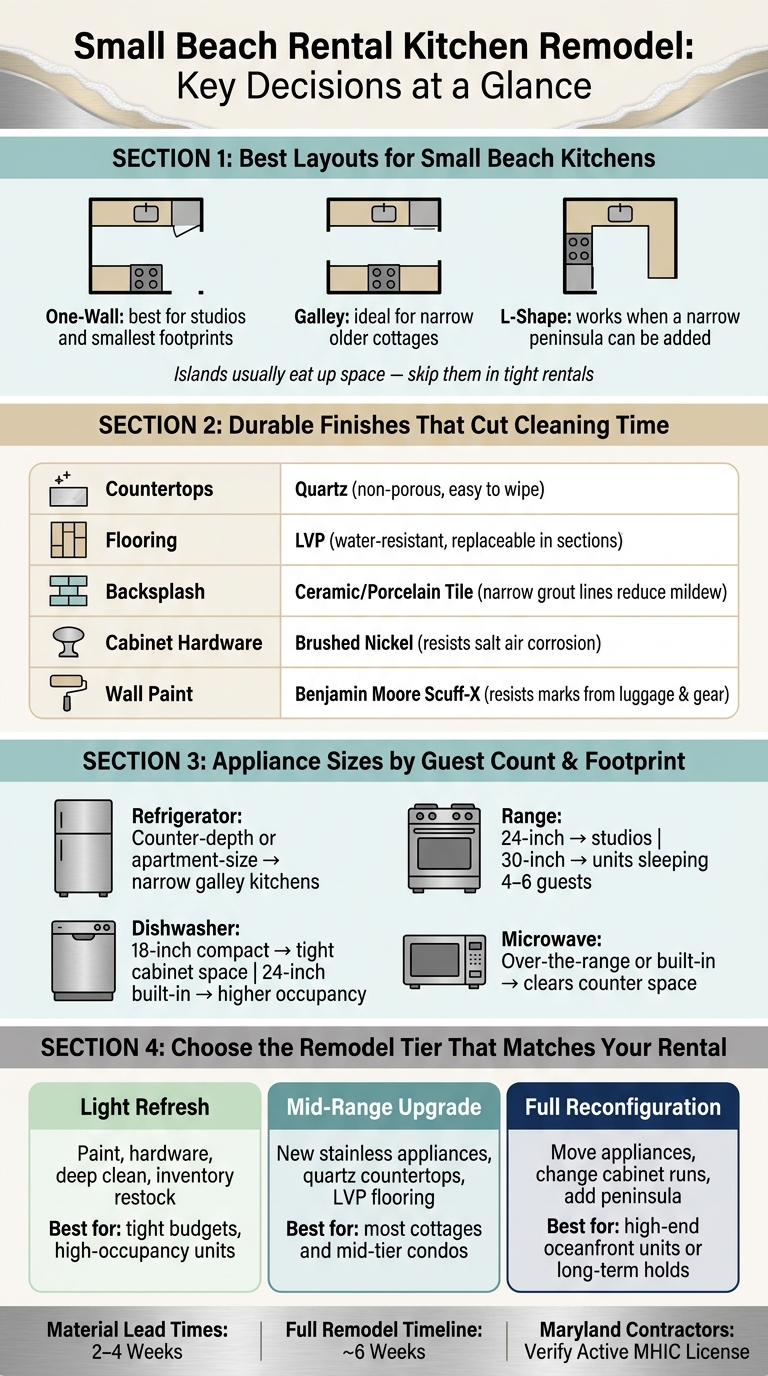
Beach Rental Kitchen Remodel: Materials, Appliances & Scope at a Glance
Most Eastern Shore cottages and older condos have narrow kitchens. In spaces like these, an island usually eats up room instead of helping. One-wall and galley layouts tend to work best because they let one person move through the kitchen without getting in the way of cleaning or meal prep on turnover days.
That’s why layout comes first. It shapes how guests move through the room, and it affects how long cleanup takes between stays. If the footprint allows for an L-shape, a narrow peninsula can add prep space and a casual place to eat without cramming a separate table into the room.
Once the footprint is locked in, storage needs to pull its weight too. Small rentals still need room for plates, cookware, cleaning supplies, and backup inventory. The trick is fitting all of that in without making the kitchen feel crowded.
A few cabinet moves help:
"Working with Brian and Michael was great, they took care of designing the kitchen, ordering the cabinets, and making sure everything would fit while maximizing the usable space in the kitchen." - Conrad Boyle, Property Owner
After storage capacity, the next call is how much of that storage should stay visible. Open shelving may look lighter in listing photos, but it also shows sand, dust, and grime fast. In a rental, that means more wiping, more resetting, and more chances for the kitchen to look messy between guests.
Upper cabinets do a better job of keeping dishes and supplies clean, and they cut down on wipe-downs. For most rentals, that makes them the better fit.
| Feature | Open Shelving | Upper Cabinets |
|---|---|---|
| Storage Capacity | Lower; limited to what looks organized | Higher; allows stacking and hidden clutter |
| Coastal Durability | Moderate; requires frequent washing of items | High; helps protect hardware and dishes from humidity |
| Visual Openness | High; makes small kitchens feel larger | Lower; can make narrow spaces feel boxed in |
For most Eastern Shore rentals, upper cabinets make more sense. Open shelving works better as a small accent, not the main storage plan.
Once the layout and storage plan are set, the next call is simple: pick surfaces that clean fast and can take a beating. In a small beach cottage, that matters more than fancy details. Every finish has to deal with sand, humidity, and fast guest turnover.
Quartz is a smart countertop pick for coastal rentals because it is non-porous, stain-resistant, and easy to wipe down.
For backsplashes, ceramic or porcelain tile with narrow grout lines makes more sense than anything fussy. Less grout means fewer spots for mildew to creep in during humid months.
Luxury vinyl plank (LVP) is one of the best flooring picks for a small beach kitchen because it is water-resistant, stands up well to sand, and can be replaced in sections if one area gets damaged.
Small finish choices matter too. Brushed nickel hardware is a solid coastal option because it resists corrosion from salt air. On walls and around entry points, a scuff-resistant paint like Benjamin Moore Scuff-X helps fend off marks from luggage and beach gear.
The finishes that tend to earn their keep are the ones that cut cleaning time and make it through a full rental season without constant fixes. Tile with lots of grout lines and other high-maintenance details often create more work without making the kitchen better for guests.
Here’s the short version:
| Finish Category | Rental-Smart Choice | Why It Works |
|---|---|---|
| Countertops | Quartz | Non-porous and easy to clean |
| Flooring | LVP | Water-resistant and easy to replace in sections |
| Backsplash | Ceramic or porcelain tile | Narrow grout lines reduce mildew concerns |
| Cabinet hardware | Brushed nickel | Resists corrosion from salt air |
| Wall paint | Benjamin Moore Scuff-X | Resists marks from luggage and beach gear |
With durable surfaces handled, the next call is appliance size and remodel scope. In a small kitchen, both need to stay tight. Bigger isn't better if it eats up walkway space or pushes the budget past what the property can earn back.
In narrow galley and one-wall kitchens, stick with appliances that fit the room instead of fighting it. A counter-depth or apartment-size refrigerator helps keep traffic moving. For cooking, a 24-inch range works well in smaller units, while a 30-inch range makes more sense for properties that sleep 4–6 guests. Dishwashers should follow the cabinet layout: 18-inch if space is tight, 24-inch if the unit has higher occupancy. Over-the-range or built-in microwaves free up counter space in small footprints.
Serviceability matters just as much as size. Pick dependable models that are easy to repair, especially during peak season. If an appliance is near the end of its life, replace it before it fails and turns into guest complaints or refund requests.
Use the table below to match appliance sizes to guest count and footprint.
| Appliance | Size Options | Best Fit |
|---|---|---|
| Refrigerator | Counter-depth or apartment-size | Narrow galley kitchens; keeps walkways open |
| Range | 24-inch or 30-inch | 24-inch for studios; 30-inch for units sleeping 4–6 |
| Dishwasher | 18-inch compact or 24-inch built-in | 18-inch where cabinet space is tight; 24-inch for higher occupancy |
| Microwave | Over-the-range or built-in | Clears counter space in small footprints |
After appliance sizes are set, choose the lightest remodel tier that fixes the space problem. That's usually the right move. The goal isn't to do more work just because you can. It's to improve flow, cleanup, and wear resistance without putting more into the kitchen than the property can support.
Match the remodel to the unit's earning power, then use the table below for scope.
| Remodel Tier | Scope | Rental Appeal | Best For |
|---|---|---|---|
| Light Refresh | Paint, hardware, deep clean, inventory restock | Improves photo-readiness and cleanliness scores | High-occupancy units with tight budgets or short timelines |
| Mid-Range Upgrade | New stainless appliances, quartz countertops, LVP flooring | Boosts nightly rates; attracts repeat guests | Most cottages and mid-tier condos |
| Full Reconfiguration | Moving appliances, changing cabinet runs, or adding a peninsula | Maximizes space; justifies premium rates | High-end oceanfront units or long-term holds in higher-rate buildings |
A small rental kitchen comes down to four choices that matter day to day: layout efficiency, durable materials, practical storage, and right-sized appliances.
That's the core of it. If the layout works, the finishes hold up, the storage makes sense, and the appliances fit the space, the kitchen does its job without becoming a headache between guests.
After you've locked in the layout and material choices, the next thing to nail down is timing. In Ocean City, summer remodeling slots are often booked months before peak season. Material lead times vary by supplier, and on-site construction for a full remodel with materials in stock typically runs 10 to 12 days. OC Home Services builds its kitchen remodeling schedule around these rental deadlines, since a booked calendar leaves no room for slippage.
Before work begins, make sure the contractor is licensed and that the schedule lines up with your booking calendar. Maryland requires an active MHIC license for remodeling work. Check the license number before you sign anything.
For beach cottage rentals, put your money into upgrades that hold up, clean up fast, and make daily use easier: quartz countertops, LVP flooring, and updated appliances.
That kind of choice matters more at the beach than people think. Salt air, sand, humidity, and heavy guest turnover wear things down fast. Quartz stands up well to hard use and wipes clean without much fuss. LVP handles wet feet, dropped bags, and constant traffic better than many other flooring options. Newer appliances also make the kitchen feel less dated and cut down on guest complaints.
A fully stocked kitchen helps, too. Basics like a blender, coffee maker, and enough cookware can improve guest satisfaction and support higher nightly rates. It’s a small detail on paper, but in a rental, that everyday ease goes a long way.
Start with a thorough inspection. In coastal properties, hidden moisture damage - rot, mold, soft subflooring, and wall issues - is common, and it can turn a simple remodel into a much bigger job if you miss it up front.
After that, put your money into the kitchen and bathrooms first. Those spaces tend to have the biggest effect on bookings and nightly rates. Guests notice them fast, and dated finishes can drag down the whole listing.
If your budget or timeline is tight, skip major structural changes. Keep plumbing and electrical where they are. That move alone can save a lot of money and cut down on delays.
Instead, focus on updates that hold up well and are easy to maintain:
One more thing: set aside 10–15% of your budget for surprises during demolition. Older beach-area homes often hide problems behind walls or under floors, and that's where budgets can get thrown off track.
Before a kitchen remodel, start with the basics. Ask whether the contractor is licensed by the Maryland Home Improvement Commission and whether they'll pull any required local permits for plumbing, electrical, or structural work.
That matters more than most homeowners think. If a contractor can't pull permits, inspections may not happen, and code issues can slip through until they're expensive to fix.
You should also ask for a detailed written proposal with a project timeline. Not a vague estimate. Not a rough verbal number. A written scope that shows what's included, what isn't, and when the work is expected to happen.
Insurance is another must-have. Confirm the contractor's coverage and ask whether your project needs a Certificate of Insurance. It's simple paperwork, but it helps protect you if something goes wrong on site.
And don't skip the design plan. In coastal Maryland homes, moisture changes the game. Your plan should spell out the finishes being used and show that they're suited for humidity, salt air, and day-to-day wear. Moisture-resistant materials aren't a nice extra near the coast. They're part of doing the job right.
