
Choose crown molding for the ceiling line, wainscoting for lower-wall protection, or both when the room’s proportions allow. Before choosing trim for your Eastern Shore home, check for leaks and damp walls, then size your profiles for your ceiling height - whether it’s 8, 9, or 10 feet.
Your choice comes down to style, moisture exposure, installation, upkeep, and installed cost:
<u>Fix moisture problems before covering the walls.</u> Then compare samples, confirm the layout, and verify your contractor’s licensing and insurance before work starts.
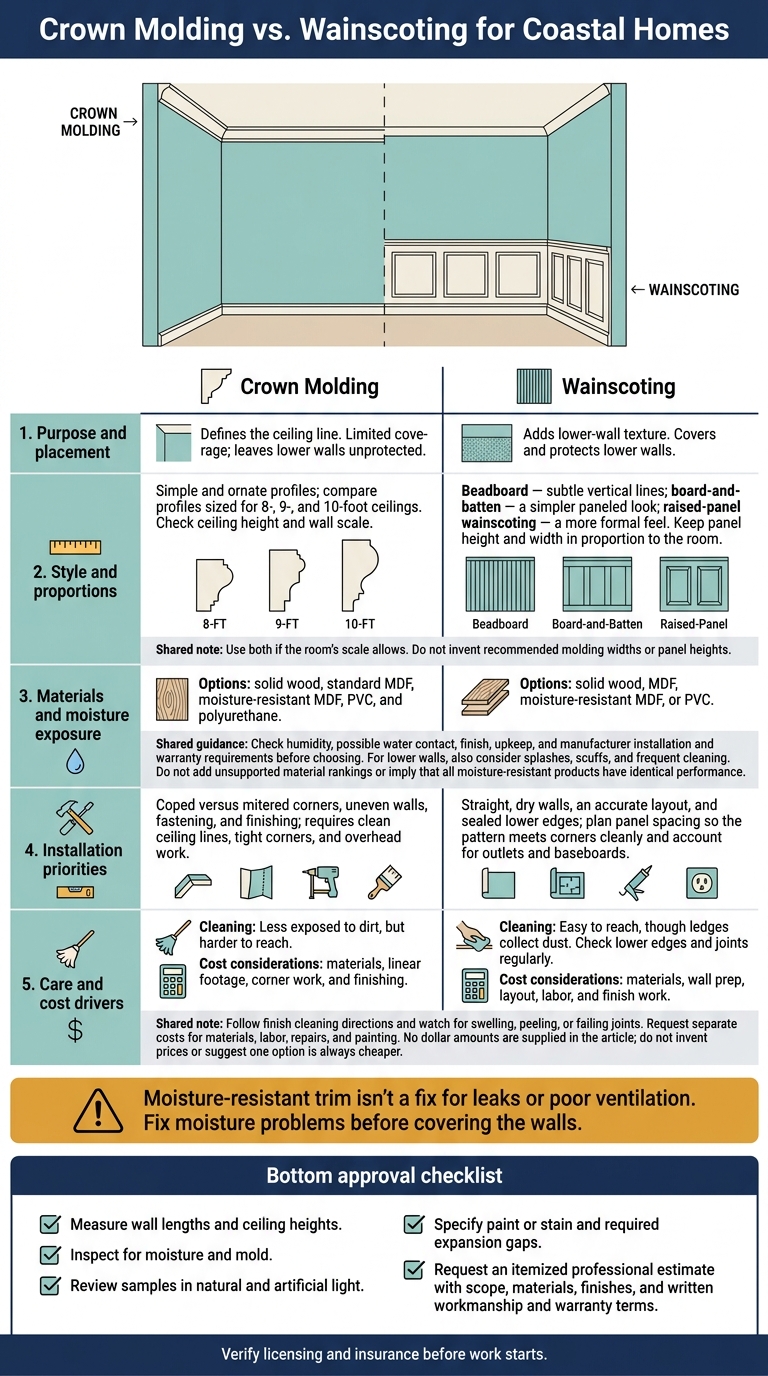
Crown Molding vs. Wainscoting for Coastal Homes
Compare simple and ornate profiles sized for 8-, 9-, and 10-foot ceilings. During the walk-through, check that the profile fits both the ceiling height and the scale of the walls. Then consider which material will hold up in coastal rooms.
Compare solid wood, standard MDF, moisture-resistant MDF, PVC, and polyurethane. The right choice depends on the room’s moisture exposure, the finish, and how much upkeep you’re willing to take on.
Ask how the installer will handle coped versus mitered corners, uneven walls, fastening, and finishing. Get those details settled before installation.
Request a written estimate with separate costs for materials, corner work, and finishing. Get product and workmanship warranties in writing before work starts. These installation details also matter when trim moves from ceiling lines to wall coverage.
Crown molding caps a room; wainscoting anchors the lower walls. Choose beadboard for subtle vertical lines, board-and-batten for a simpler paneled look, or raised-panel wainscoting for a more formal feel. Keep panel height and width in proportion to the room so the walls look balanced, not heavy.
In Ocean City and Bethany Beach, check moisture exposure before covering lower walls. Ask how solid wood, MDF, moisture-resistant MDF, or PVC will hold up to the room’s humidity. Splashes, scuffs, and frequent cleaning also matter when choosing the material and finish.
Have the installer plan panel spacing across each wall so the pattern meets the corners cleanly. Follow the cleaning directions for the finish, and check lower edges and joints regularly.
As with crown molding, the final price should list materials, labor, and finish work separately. Schedule a walk-through to set the project scope. Use that visit to spell out wall prep, layout, and painting in writing. Each affects labor costs and how the finished walls look.
Crown molding and wainscoting fail for different reasons. Crown molding needs clean ceiling lines and tight corners. Wainscoting needs straight, dry walls, an accurate layout, and sealed lower edges.
Inspect and repair damp walls before installation. Moisture-damaged material beneath the trim shortens its life.
Confirm the layout before cutting or fastening, and hire a pro if walls or ceilings are out of square. If the job includes mold or other moisture problems, choose a contractor who can handle both the carpentry and the needed remediation.
Set the finish before work begins. In humid coastal rooms, watch for swelling, peeling, or failing joints. If joints keep opening, fix the moisture source before reworking the trim.
Once the layout and prep are settled, break out pricing by labor, finishing, and repair.
For coastal projects, ask for a detailed written estimate that separates carpentry-only work from installation, finishing, and painting. Costs depend on material, linear footage, corner work, wall repair, and finish level. Crown molding’s corners add labor; wainscoting’s wall prep and layout affect labor costs, too.
Local contractors provide written estimates and warranties. Keep both in writing. Verify licensing and insurance before work starts.
Once you’ve chosen a profile and material, weigh how each option handles wear, cleaning, and moisture. Crown molding finishes the ceiling line; wainscoting adds texture and protects the lower wall. In coastal homes, moisture resistance and upkeep matter just as much as looks.
| Consideration | Crown molding | Wainscoting |
|---|---|---|
| Visual effect | Defines the ceiling line. | Adds lower-wall texture. |
| Coverage and protection | Limited coverage; leaves lower walls unprotected. | Covers and protects lower walls. |
| Installation demands | Requires tight corner miters and overhead work. | Requires careful layout around outlets and baseboards. |
| Cleaning | Less exposed to dirt, but harder to reach. | Easy to reach, though ledges collect dust. |
The profile shapes the look. The material determines how well the trim holds up in coastal conditions.
| Material or style | Pros | Cons |
|---|---|---|
| Wood | Familiar look; easy to paint. | Prone to moisture damage and rot in humid coastal rooms. |
| Moisture-resistant trim | Resists warping and rot. | Can still fail if leaks go unrepaired. |
| Beadboard | Classic coastal texture. | Grooves collect dust. |
| Board-and-batten | Strong architectural lines. | Requires flat, even walls. |
Moisture-resistant trim isn’t a fix for leaks or poor ventilation. It resists damage, but those problems still need attention.
Once you’ve weighed appearance, moisture resistance, and upkeep, match the trim to the room’s size and exposure. Crown molding defines the ceiling line. Wainscoting protects the lower walls. Use both if the room’s scale allows, and check how they work together with the ceiling height and existing trim.
In an Eastern Shore home, material choice starts with humidity and possible water contact. Before approving wood, standard MDF, moisture-resistant MDF, or PVC, check the manufacturer’s installation and warranty requirements.
Before approval, confirm:
For rooms with 8-foot ceilings, choose crown molding profiles 3 to 5 inches high. Larger trim can overwhelm the room and make the ceiling feel lower. Go too small, though, and the molding may barely stand out.
Wainscoting usually works well at 32 to 36 inches high, keeping the walls in proportion. Match the scale of your trim to your home’s architectural style.
Yes, moisture-resistant medium-density fiberboard (MDF) works for bathroom wainscoting. Standard MDF can swell in high humidity. Moisture-resistant varieties are made to handle the damp conditions common in Eastern Shore bathrooms.
The installation detail that matters: seal and paint every cut edge. This helps keep moisture out and protects the trim’s condition and appearance in coastal settings.
Schedule a professional walkthrough with OC Home Services before installing crown molding or wainscoting. Our carpenters check your walls’ moisture levels and the surrounding conditions to see whether the surfaces are dry enough for installation.
Eastern Shore coastal humidity can lead to warping or adhesion problems. Checking wall readiness before work begins helps prevent those issues. Contact us to arrange an inspection.
