
If you own a Shore home, the hall bath usually pays off first for resale and rentals, while the master bath usually pays off first for daily comfort.
Your choice comes down to cost, timing, daily use, guest impact, and how well materials hold up near salt air. On Delmarva, a hall bath often costs $10,000 to $35,000 and may return 60% to 75% at resale. A master bath often costs $35,000 to $120,000+ and may return 55% to 70%, but it can do more for long-term comfort, safety, and aging in place.
Before you decide, focus on these points:
| Factor | Master Bath | Hall Bath |
|---|---|---|
| Typical cost | $35,000 to $120,000+ | $10,000 to $35,000 |
| Resale return | 55% to 70% | 60% to 75% |
| Best for | Daily use, long stays, aging in place | Resale, guests, vacation rentals |
| Project length | 6 to 10 days | 6 to 10 days |
| Buyer impact | Better for comfort and high-end appeal | Better for first impressions |
| Coastal wear | More fixtures to protect | Simpler and easier to maintain |
For most owners, the short answer is simple: if your next five years involve guests, buyers, or renters, start with the hall bath; if those years are about living in the home, start with the master.
A master bath remodel tends to make the most sense when long-term comfort matters more than a fast resale bump. A full tear-out and rebuild often includes a walk-in shower with a low or zero threshold, a freestanding soaking tub, a custom dual vanity, better lighting, and more storage.
That scope adds up fast. Moving plumbing or drains, installing frameless glass enclosures, and buying coastal-grade hardware can push the price far past what a hall bath refresh would cost. You get a space that feels more tailored and easier to live with day to day. But the financial payback usually isn't stronger. Master bath remodels often recoup less than smaller bath updates because the upfront spend is higher, and many buyers won't pay full price for luxury add-ons. In mid-range markets, that ceiling matters. Steam showers and heated floors may look great on paper, but buyers don't always pay much extra for them.
For homeowners planning to stay, the master bath is often the right place to spend for comfort and safety. This is especially true for year-round residents, retirees, and long-term owners. For people in that group, the return shows up in daily use: more comfort, less hassle, and a space that's easier to maintain.
Aging-in-place upgrades are one of the clearest reasons to invest here. A curbless, zero-threshold shower removes a real trip hazard. Built-in shower seating, grab bars, handheld showerheads, comfort-height vanities, and extra recessed lighting can make the room much easier to use as mobility needs shift over time.
With materials in stock, on-site construction for a primary/master bath remodel typically takes 6 to 10 days.
On the Shore, though, good design isn't just about looks. Materials have to stand up to salt air, humidity, and daily use.
On Delmarva, material selection matters more than it does inland. Salt air and high humidity can wear down standard finishes much faster than many homeowners expect. PVD-coated brass or marine-grade 316 stainless steel fixtures usually cost 25% to 40% more than standard options, but they last much longer in Shore conditions.
For tile, large-format porcelain is the smart pick. It has a water absorption rate of 0.5% or less and leaves fewer grout lines where moisture can sit. In wet areas, pair it with epoxy grout. Standard cement grout can break down within 5 to 8 years under the salt and moisture cycling common across the Eastern Shore.
Then finish the room the right way. Use moisture-tolerant paint and install a strong exhaust fan. In humid coastal conditions, ventilation is essential to help prevent mold.
If this is the home's only tub, keep it. Taking it out can hurt resale appeal, especially for family-focused buyers.
If the main goal is faster resale or better guest turnover, the hall bath often gives the stronger next-step return.
If the master bath is the comfort project you do for yourself, the hall bath is often the quicker win for resale, guests, and rental use. It’s the shared bathroom visitors and renters see first. In older Shore homes, condos, and rentals, that room shapes first impressions more than many owners expect. Still, a lot of people put it off while they focus on a larger master suite job.
That’s often a mistake.
Guest and hall bathroom refreshes often recoup 60% to 75% at resale. A refresh usually costs $10,000 to $25,000, while a full mid-range remodel often lands between $18,000 and $35,000 and takes about 6 to 10 days with materials in stock. That shorter timeline makes this kind of project easier to fit between rental seasons. A pre-listing refresh in the $15,000 to $25,000 range can still help lift offers in competitive Delmarva markets. In places like Rehoboth or Ocean City, dated guest bathrooms are one of the main reasons buyers come in lower than sellers expect.
In vacation rentals, an updated hall bath can help guest reviews because cleanliness matters more than luxury.
You don’t need a full gut job to change how the room feels. A few updates tend to do the heavy lifting:
Material choice matters more near the coast. LVP keeps gaining traction in coastal bathrooms because it handles moisture and wear well. In tiled wet areas, epoxy grout holds up better against repeated moisture exposure, which can wear down standard cement grout over time.
If the hall bath is the home’s only tub, keep it. Removing it can hurt resale appeal. With 78% of buyers rating both a shower and a tub as "essential" or "desirable", that’s not a small detail in the Shore market.
Older Shore homes and condos often have hall baths that feel tight by current standards. The good news: you can improve how the room works without moving plumbing.
Compact vanities, slim-profile toilets, recessed storage like medicine cabinets and shower niches, and pocket doors can all free up usable space without changing the layout. And if cost control is the goal, this is the big one: keep the plumbing where it is. Moving drains or supply lines adds time and pushes the price up fast.
Ventilation is another area where owners shouldn’t cut corners. Install an exhaust fan rated at a minimum of 1 CFM per square foot, and make sure it vents to the exterior - never into the attic.
Those tradeoffs set up the head-to-head comparison below, which is where the real decision usually gets made.
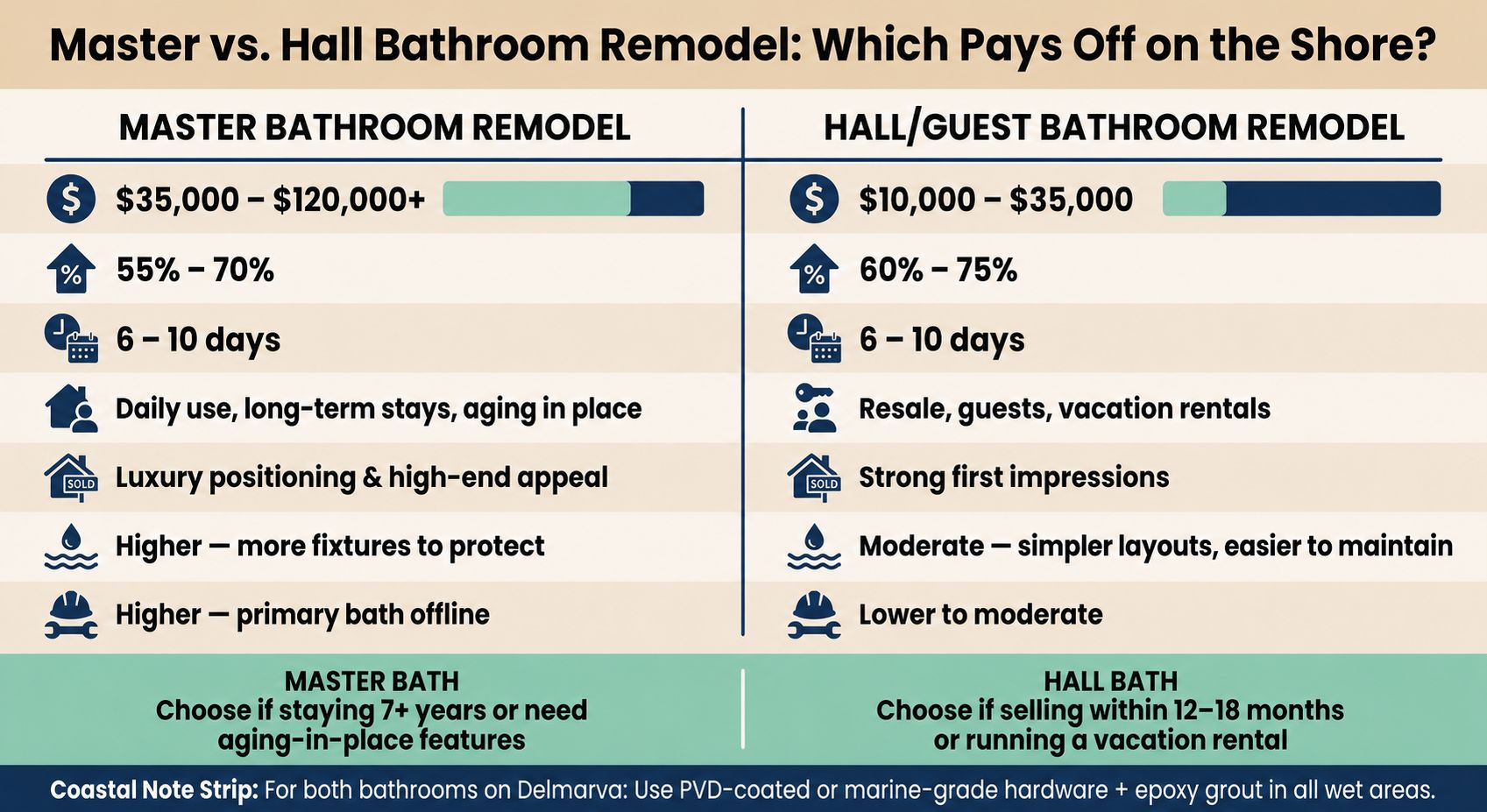
Both projects add value, but not in the same way. The biggest gaps show up in cost, resale return, and how each space works day to day.
| Factor | Master Bathroom Remodel | Hall/Guest Bathroom Remodel |
|---|---|---|
| Typical Cost Range | $35,000–$120,000+ | $10,000–$35,000 |
| ROI at Resale | 55%–70% | 60%–75% |
| Best Resale Impact | Strong for luxury positioning | Strong for first impressions |
| Daily Use | High - primary bath | Lower - secondary bath |
| Home Disruption | Higher - the primary bath is offline | Lower to moderate |
| Coastal Maintenance | Higher - more fixtures and premium materials | Moderate - simpler layouts and easier cleaning |
The hall bath usually wins on resale efficiency. The master bath wins on daily comfort.
On Delmarva, though, those numbers don’t live in a vacuum. Salt air, humidity, and permit costs can change the math fast.
Salt air is hard on fixtures. Over time, it cuts down the life of standard metals, which is why coastal-grade finishes, epoxy grout, and porcelain tile tend to hold up better in both bathrooms. In a master bath, that matters even more. You often have more to protect - dual vanities, bigger shower systems, and freestanding tubs - so the number of exposed fixtures goes up, and so does the upfront cost.
Permits also matter here. On Delmarva, licensed Maryland contractors and permit requirements come into play fast when a project includes plumbing, electrical, or structural changes .
This comes down to timing, budget, and how you live in the home.
Prioritize the master bath if you plan to stay 7 years or longer, need aging-in-place features, or want to position a high-end home well on the market. In that case, daily function and long-term satisfaction often matter more than a slightly lower percentage return.
Prioritize the hall bath if you expect to sell within 12 to 18 months, run a vacation rental, or need to keep spending tighter. A fresh guest bath can shape buyer first impressions for less money overall, and updated shared baths are often the smarter move for vacation rental results .
If the home has only one tub, keep it in the bathroom most likely to affect resale.
After you compare cost, ROI, and day-to-day use, the choice gets pretty simple: which bathroom fixes the bigger problem first?
The first remodel should line up with three things: which bathroom gets used most, whether you expect to sell soon, and which room is more likely to stand up to coastal wear. That's why this call usually comes down to use, timing, and coastal durability.
On Delmarva, the rest is about picking finishes and fixtures that can handle humidity, salt air, and heavy use - and knowing when local permits come into play if plumbing or electrical work is part of the job.
Choose the master bath if you plan to stay in the home for years or want aging-in-place upgrades. Daily use and long-term comfort usually make that the better first move.
Choose the hall bath if you're getting ready to sell, running a vacation rental, or trying to keep the budget tighter. An updated guest bath is seen by every visitor and buyer - and it often gives a strong return for each dollar spent. Either way, specify PVD-coated or marine-grade hardware and epoxy grout in wet areas. On the Shore, those are the basics. OC Home Services factors in this five-versus-one-bath tradeoff on nearly every bathroom remodeling consultation, since the right starting point depends on how long the owner plans to stay.
For most Shore owners, the smarter first remodel is the one that fits the home's next five years, not just its next listing photo.
If your budget is tight, start with the hall or guest bathrooms. In many homes, updating two or more secondary bathrooms costs less than remodeling one master suite. That can do more for buyer first impressions, too.
Stick to smaller cosmetic changes. A new coat of paint, swapped-out fixtures, better lighting, or fresh grout can change how the room feels without pushing the budget too far.
If your master bathroom already works well, leave it alone for now. Put that money into smaller updates across the secondary bathrooms instead.
Moving plumbing can increase bathroom remodel costs in a big way. It often means structural work, rough-in labor from licensed pros, and permit fees.
Depending on the scope, plumbing rough-in work and new fixtures can add about $2,500 to $18,000. That’s a lot more than a cosmetic update. Why? Because you’re not just swapping finishes. You’re relocating water lines and drain pipes, and that adds labor, time, and inspection steps.
Choose marine-grade 316 stainless steel or PVD-coated brass for fixtures. In coastal conditions, standard chrome and 304 stainless steel tend to wear out sooner. Matte black epoxy-coated fixtures are also a solid pick if you want a darker finish that holds up well.
For surfaces, stick with vitrified porcelain tile, engineered quartz or quartzite, and epoxy grout in wet areas. Those materials do a better job standing up to salt air and moisture.
